
Lifting & Contour
Ultherapy Prime vs Thermage: What Each One Does
Ultrasound is focused onto a single point beneath the skin, where it leaves a small coagulation point; as those points heal, the tissue draws together and a slackened contour is drawn back. At The Other, the shots are planned depth by depth, and pain is managed in four stages so the shots that were planned can actually be delivered to the end.
What Ultherapy Prime does
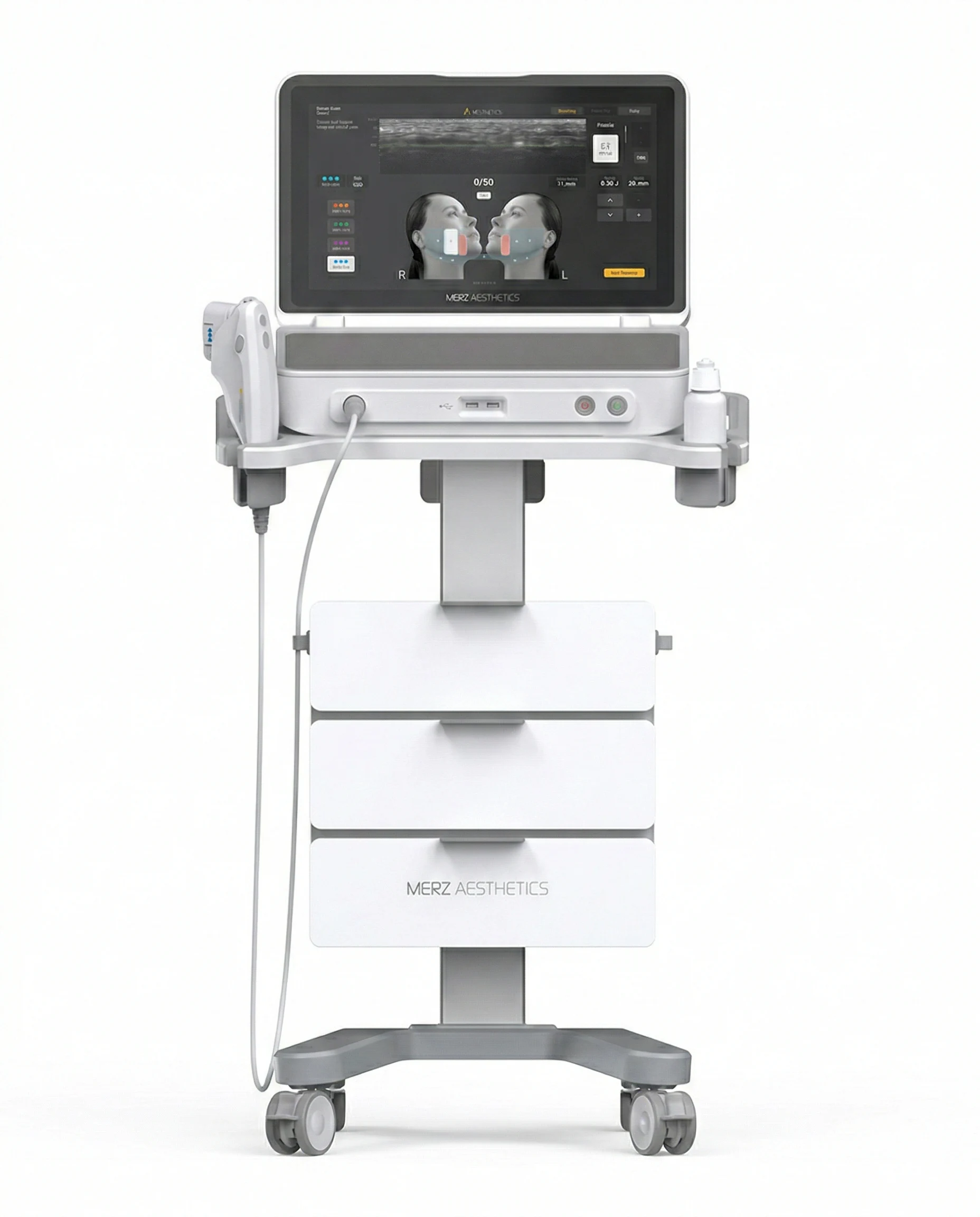
Ultherapy Prime is a high-intensity focused ultrasound (HIFU) device that delivers heat only to the deep layers without breaking the skin surface. Where the ultrasound converges, a small thermal coagulation point forms, and as those points heal the tissue contracts and a slackened contour is drawn back.
What separates it from other lifting devices is that the operator can see the layer while treating it. DeepSEE™ imaging shows on screen the layer the energy is about to enter, and the shot is placed against that image. On the Prime generation the screen is 35% larger, the ultrasound field is twice as wide, and imaging stays stable to a depth of 8mm — being able to place energy accurately in the fascial layer (SMAS) is the practical change in this generation.
With the same device, the result still depends on which depth receives how many shots and where. So the plan decides as much of the outcome as the device does.
The same set of shots is not given to every patient.
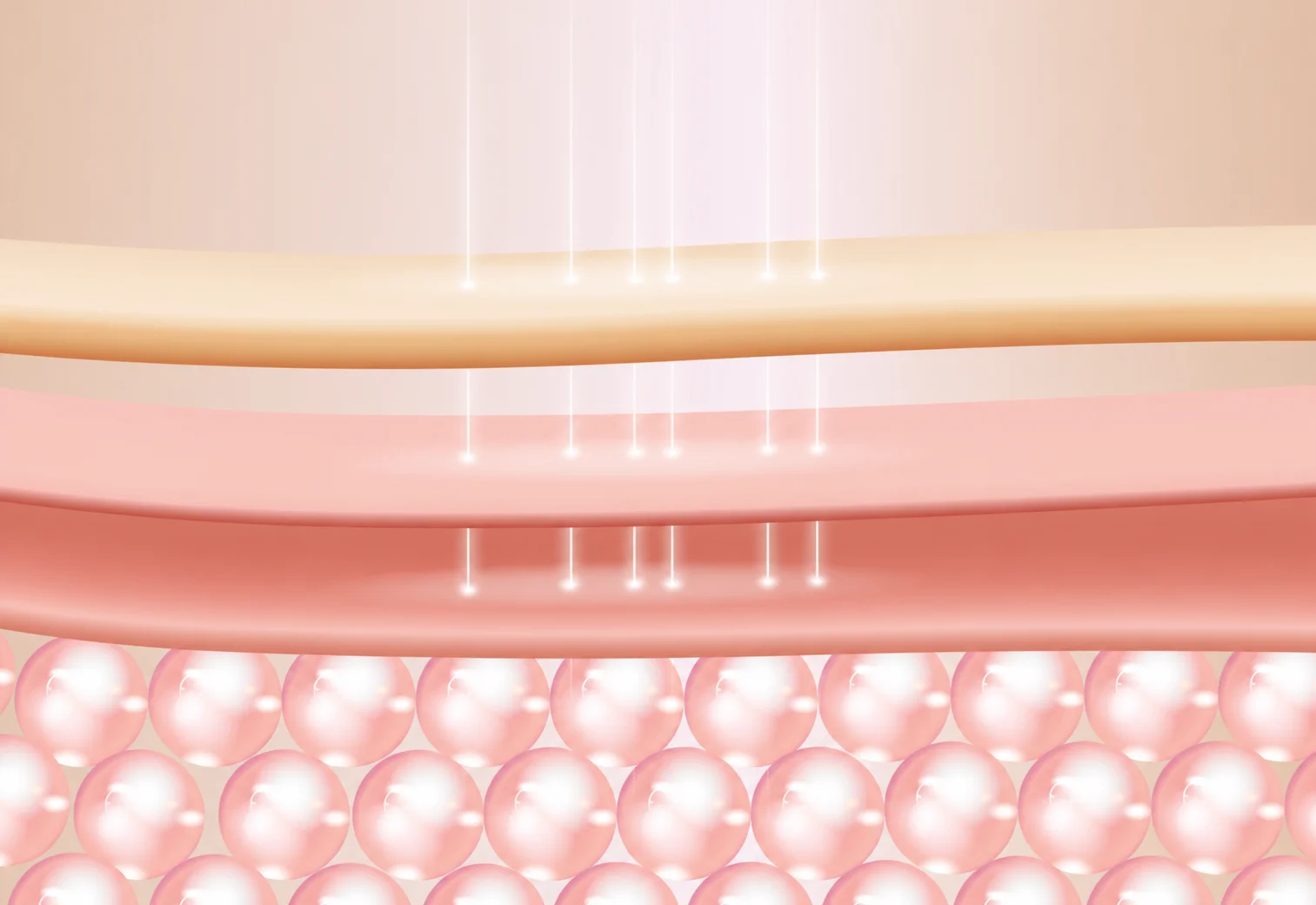
Before treatment, skin thickness, fat volume, and the pattern of ageing are assessed to plan which area receives how many shots at each depth. This is why the same device can give different results depending on who designs the treatment.
The Other is an officially approved Ulthera medical institution and uses only genuine devices and genuine tips. Non-genuine tips are one of the major causes of adverse effects.
The Other's Precision Shot Design System
1.5mm
the superficial dermis
Work at this depth is focused on fine wrinkles and skin texture, to create a smooth, firm skin surface.
3mm
the deep dermis
Collagen remodelling is stimulated in the deep dermis to restore the skin's firmness and fullness.
4.5mm
the SMAS fascial layer
Energy is concentrated in the fascial layer deep under the skin to achieve a strong lifting effect.
Who it suits and who it does not
It suits you if
- Sagging of the jawline and cheeks where the lift has to come from the fascial layer — a state in which tightening the surface alone is not enough.
When it is not used
- Caution is needed where there is little facial fat or the skin is thin — at 4.5mm the energy can affect the fat layer beneath the SMAS, and hollowing of the cheeks can follow. If volume loss is the main problem, restoring volume comes before lifting.
How it differs from Thermage
Both tighten with heat, but they deliver the energy in different ways. Ultherapy focuses ultrasound onto a point and works down as far as the fascial layer; Thermage warms the dermis broadly, as a volume, with radiofrequency. One works in points, the other across a surface.
So what each does well diverges. Lifting from deep down is the ultrasound side; elasticity and texture through the full thickness of the skin is handled more evenly by radiofrequency. When sagging and loss of firmness are both on the list, it stops being a question of choosing one and becomes a question of order and interval.
The actual choice is made by looking at skin thickness, fat volume, and the direction of the sagging. There is no answer to which device is better — only which one fits this face right now.
Thermage FLX
- Energy
- Radiofrequency (RF)
- How it is delivered
- Warms the dermis broadly, as a volume
- Depth treated
- Across the dermis
- Imaging while treating
- No
- Mainly addresses
- Elasticity and texture through the thickness of the skin
Ultherapy Prime
- Energy
- High-intensity focused ultrasound (HIFU)
- How it is delivered
- Focused onto a point to create a thermal coagulation point
- Depth treated
- 4.5mm fascia (SMAS) · 3.0mm deep dermis · 1.5mm
- Imaging while treating
- Layers are viewed with DeepSEE™ imaging during treatment
- Mainly addresses
- Sagging that has to be lifted from a deep layer
What to expect and how long it takes
There is a sense of tightening from immediately after the treatment, and as collagen is remodelled the effect builds over 2 to 3 months. It holds for up to a year, with individual variation.
Because it is non-invasive, you can return to daily life the same day. Mild redness or swelling may last 1 to 2 days and usually settles on its own. Treatment time depends on the area and the number of shots, but is usually within 1 hour.
Treatment interval
Reassessed after one session
The next step is decided once the response has settled.
When results appear
Over 2 to 3 months
Not immediately after treatment — it builds as collagen is remodelled.
Recovery
Same-day return to daily life
Mild redness and swelling may last 1 to 2 days.
Aftercare
Because the treatment is non-invasive there is no particular recovery period. You can carry on as usual from the day of treatment, though avoiding saunas, heated rooms, and hard exercise for 1 to 2 days is easier on any swelling.
Sun protection can stay as it normally is. If during recovery you have pain unlike the usual soreness after this treatment, or redness that spreads, please contact us rather than waiting for your next appointment.
How the pain is managed
With this treatment, cutting the number of shots because it hurts also cuts the result. That is why The Other runs a staged pain-control protocol.
A high-concentration topical anaesthetic is applied 40 to 60 minutes before treatment to soften surface sensation, and nerve blocks are given over the main nerve distributions to block deeper pain. For patients who are particularly sensitive to pain, an intramuscular analgesic injection, inhalation anaesthesia, or sedation is provided.
The point is not to use all four stages, but to create a state in which the shots that were planned can be delivered to the end.
Main risks
Temporary swelling, redness, and bruising. Uncommonly, temporary changes in sensation from nerve irritation, and atrophy of fat in areas where energy has gone in too superficially or too heavily.
Frequently asked questions
How is this different from the previous Ultherapy?
The ultrasound screen is 35% larger, the field is twice as wide, and imaging stays stable to a depth of 8mm. Being able to place energy accurately in the fascial layer is the practical difference.
How long does treatment take, and what is the recovery?
It depends on the area and the number of shots, but is usually within 1 hour. Because it is non-invasive you can return to daily life the same day, and mild redness or swelling may last 1 to 2 days.
When will I see a result?
There is a sense of tightening right after treatment, and as collagen is remodelled the effect builds over 2 to 3 months. It holds for up to a year, with individual variation.
I have heard it is very painful.
Pain is managed in four stages: topical anaesthetic, nerve block, inhalation anaesthesia, and sedation. Since cutting the number of shots because of pain also cuts the result, the aim is to create a state in which the planned shots can be delivered to the end.
Will my cheeks look hollow afterwards?
Fat atrophy has been reported, uncommonly, in areas where energy went in too superficially or too heavily. That is why depth-by-depth shot planning and genuine tips matter. Skin thickness and fat volume are assessed in person before the plan is made.
This page is general information about a treatment and is not a diagnosis or a recommendation. The right choice differs by skin condition, so treatment is decided after an in-person examination. Individual results vary.
Related information
Treatment pages
- See the full Ultherapy Prime treatment page — Treatment information and booking
- All lifting and contouring treatments — Thermage FLX, sofwave, and other lifting options
- Clinic information and directions — Dosan-daero, Gangnam-gu, Seoul — booking enquiries