
Papular Scar
Papular Scar

Raised scars,
restored to a smoother surface with the Pinhole Technique
Whitish, raised papular scars around the nose or chin are fundamentally different from keloids or hypertrophic scars. That is why identifying which one it is comes before choosing a treatment.
The Other uses CO2 Pinhole Technique to precisely remodel scar tissue.
What kind of scars does papular scar treatment address?
Treatment is for scars that remain as whitish or flesh-colored raised bumps where acne has settled. Their shape is the opposite of the more common pitted acne scars, so the approach is different as well. Not every raised mark is a papular scar, so at the consultation we first confirm which kind of scar it is and then decide on a method. What a scar is and why it forms is explained in the blog article What Is a Papular Scar?; this page covers the treatment method and the order in which it proceeds.
Why Are Papular Scars First Distinguished from Keloids and Hypertrophic Scars at Consultation?
A keloid is a scar in which collagen proliferates excessively and keeps growing, whereas a papular scar is tissue that has hardened and stopped. Because both look raised, they are easy to confuse, so at the consultation we first tell which one it is and then decide on a method. The table below sets the two scars side by side by cause, symptoms, and approach; the differences between the scars themselves are covered in more detail in the blog article What Is a Papular Scar?.
Category
Keloid / Hypertrophic Scar
The Other Papular Scar
Cause
Symptoms
Conventional Treatment
The Other’s Approach
Why do papular scars form on the chin?
A papular scar is left when fibrous tissue clumps locally and hardens in the place where acne heals. The nose and the area beside it are the most common sites, while the chin and jawline are places where hormone-influenced acne tends to recur. For that reason, on the chin a scar can form again if new acne keeps appearing even after the scar has been addressed, so scar treatment and acne management are considered together. Papular scars also occur on the forehead and cheeks but are uncommon there, and a raised lesion in those areas may be something else, so distinguishing it comes first.
How The Other Approaches It
CO2 Pinhole Technique
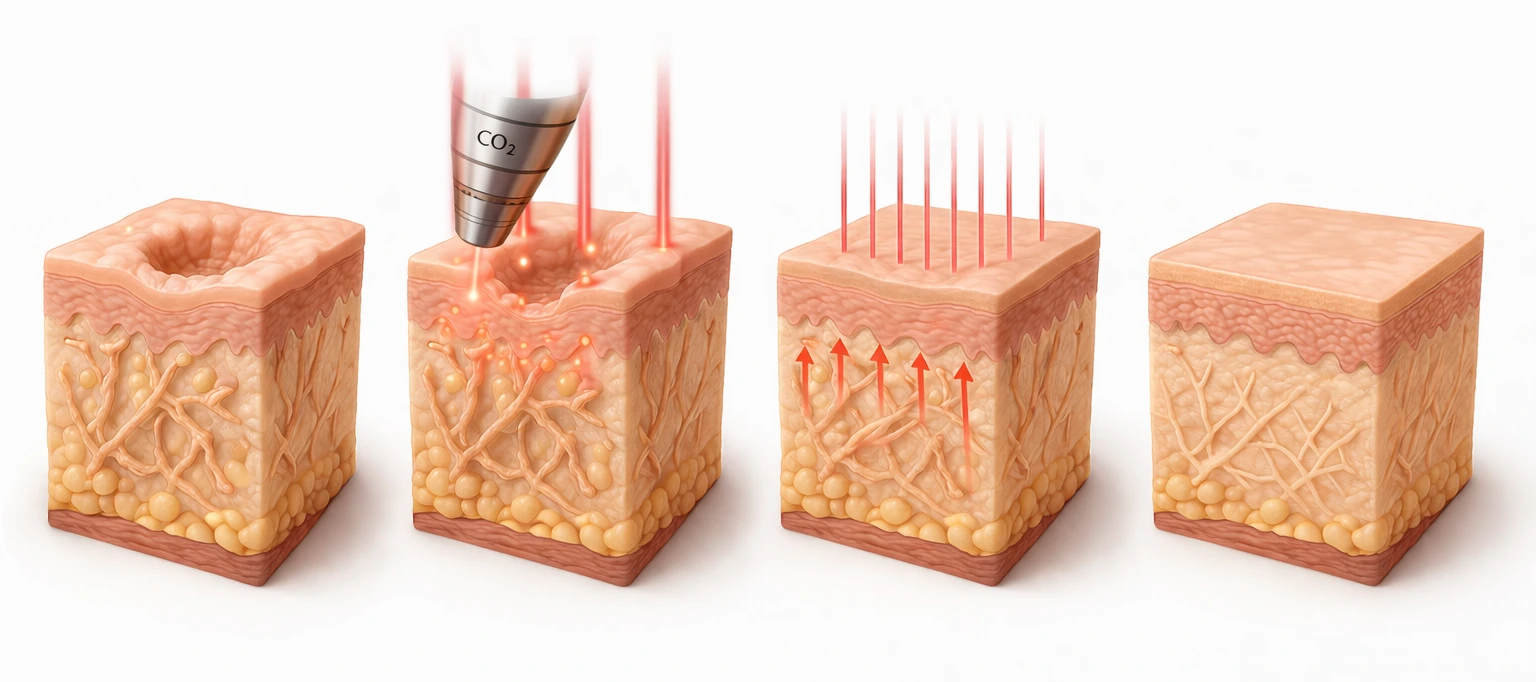
The Other Dermatology treats with the pinhole technique, which makes microscopic openings in the scar with a CO2 laser. Rather than shaving down the raised part, it makes tiny openings in the hardened fibrotic tissue from inside the skin. The steps are as follows.
Precise Micro-Channel Formation
A CO2 laser is used to create extremely fine, pinhole-like channels in the scarred area. The spacing and depth of the channels vary with how firm the scar is and where it is located.
Tissue Remodeling
The hardened scar tissue is treated through the channels that were created.
Protection of Surrounding Tissue
The treatment targets the center of the scar and is carried out so that the surrounding normal skin is not touched.
The Other Papular Scar Protocol
A papular scar is not the kind of scar that disappears all at once. Hardened tissue needs time to settle again, so treatment is carried out at intervals of 8 to 10 weeks, and shortening the interval does not make results come faster. We advise at least 3 sessions, and the number varies with how firm the scar is and how many there are, so it is decided at an in-person consultation. If a change appears, it shows up over the several weeks in which the tissue heals rather than right after treatment, and it varies from person to person.
Treatment Interval
Recommended Sessions
Precautions
What should I know about aftercare?
Right after treatment, a very small scab forms over the scar for several days. While the skin heals, we advise the following.
- Do not pick the scab; leave it until it falls off naturally. Removing it early may leave pigment behind or make the mark last longer.
- Wash your face as usual, but do not rub.
- Healing skin pigments easily, so use sunscreen even indoors.
- Wear makeup only after the scab has fallen off naturally.
- Put off exfoliating products, retinol, and high-concentration vitamin C until the scab has fallen off and the redness has settled, and moisturize generously.
- Avoid saunas and jjimjilbang, exercise that makes you sweat heavily, and alcohol for a few days.
If you notice unusual pain, discharge, or spreading redness, please contact us rather than waiting for your next appointment.
How do I tell it apart from other acne scars and marks?
Acne scars fall broadly into two types: pitted and raised. What people usually call acne scars are mostly the pitted kind, while a papular scar is the raised kind, so the approach is the opposite as well. Many people have both types on the same face, so different methods may be needed for different areas. A mark that is neither raised nor pitted but remains red or brown is not a scar; it is a pigment or vascular issue, so it is assessed separately.

Put an end to the uneven bumps that bothered you every time you looked in the mirror.
The Other’s Message
Your scars are not at fault. They simply received the wrong treatment. With The Other’s precise Pinhole Technique, we will help erase the last traces of acne left on your nose and chin.
Advanced, precise scar restoration recommended by the medical team at The Other Dermatology
Choose to restore your skin asset clearly. Consult with The Other.