
Oil & Sebum
Excess Sebum: What It Is and How It Differs from Enlarged Pores
- Written by
- The Other Dermatology medical team
- Published
- 2026.08.21
An hour or two after washing, the forehead and nose are shiny again, and by mid-afternoon makeup has slid out of place. How much oil the skin puts out is a different question from how large the pores look, and the two are measured in different ways. This page explains what sebum is, why output rises, and how much evidence stands behind each of the methods used to bring it down.
What is Excess Sebum?
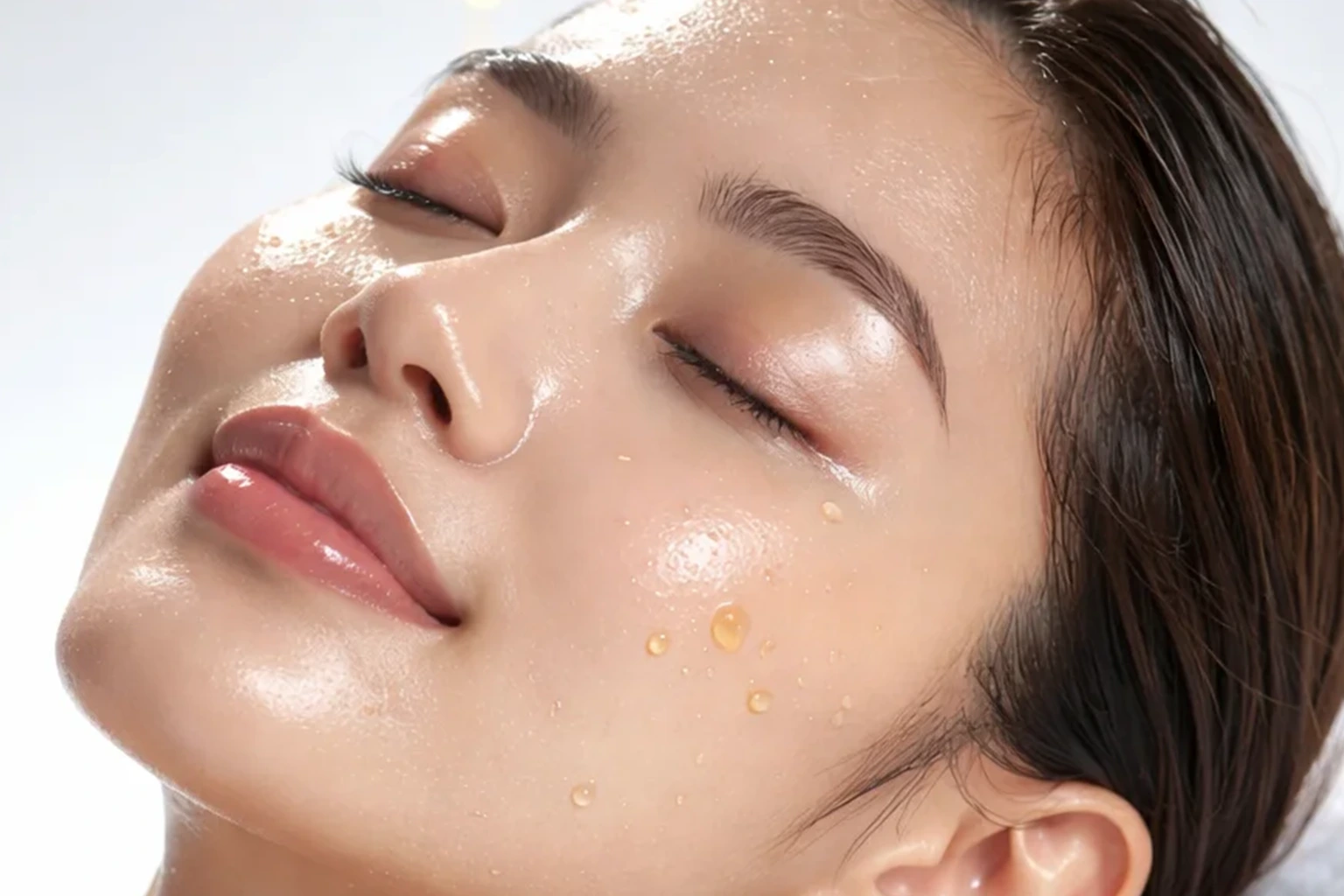
In the mirror the oil sits on the surface across the forehead, the nose and the front of the cheeks, and blotting paper buys only a short reprieve before the shine returns. By the afternoon makeup lifts and gathers.
Sebum is an oily mixture made in the sebaceous glands and carried to the surface through the pore. By composition, triglycerides and free fatty acids together account for 57.5% and are the largest fraction, wax esters make up 26%, squalene 12%, and cholesterol with its esters 4.5%. Sebum is understood to protect the skin from ultraviolet light, to act against microbes, to carry fat-soluble antioxidants to the surface, and, through particular lipids, to modulate inflammatory responses. Having sebum is not in itself the problem.
How much counts as too much is hard to settle by eye, so it is measured. The average rate of sebum secretion in adults is reported as 1 mg/10 cm² per 3 hours, and output above 1.5 mg/10 cm² per 3 hours is regarded as excessive. In the other direction, below 0.5 mg/10 cm² per 3 hours the skin can become dry. These are figures read off an instrument in the clinic, not thresholds that can be transferred to a mirror or a sheet of blotting paper.
Secretion is governed mainly by androgens. 5α-dihydrotestosterone (DHT) in particular plays the leading role in the differentiation and proliferation of sebaceous glands and in sebum production, and sebocytes express the 5α-reductase that converts testosterone into DHT. Blocking that enzyme is reported to reduce sebum. Output therefore tracks age and sex — it falls shortly after birth, climbs steeply at puberty, and declines again only after menopause in women and in the sixties and seventies in men. That men generally secrete more than women is explained by the difference in testosterone levels, and in women secretion rises around ovulation.
What happens when sebum oxidises is known only at the experimental level. Squalene peroxide, formed when the squalene in sebum oxidises, produced comedones in animal experiments, and in cell experiments it drove proliferation of keratinocytes while raising inflammatory mediators. These were observations in animals and in cells, and they do not tell us how far the same holds in human skin.
How is it different from Enlarged Pores?
People with a lot of oil often carry a pore concern alongside it, so the two are easily filed as a single problem. But excess sebum and enlarged pores are measurements of different things from the start.
Excess sebum is a question of how much the sebaceous glands put out. It is measured with a sebumeter, in mg/10 cm² per 3 hours. Enlarged pores is a question of the area of the openings at the skin surface — a matter of structure. Studies have measured it by image analysis of magnified photographs. Because the units differ, an improvement in one value cannot be said to carry the other along with it.
There are small reports in which both values fell after the same treatment. That is an observation that one procedure moved two measures together, not evidence that one is the cause of the other. Nor did the literature reviewed for this page answer which of the two should be addressed first. The approach depends on which of them is the main source of discomfort, so both are assessed together in consultation.
Enlarged Pores
- What is measured
- The area of the openings at the skin surface, read by image analysis of magnified photographs
- Confirmed reference value
- No numeric threshold separating wide from narrow was found in the literature reviewed for this page
- Main regulating factor
- What sets the size of the opening was not established here
- Do they move together under one treatment
- One small study reported a reduction in pore area
Excess Sebum
- What is measured
- The amount the sebaceous glands put out, read with a sebumeter in mg/10 cm² per 3 hours
- Confirmed reference value
- The adult average is 1 mg/10 cm² per 3 hours; above 1.5 mg/10 cm² per 3 hours is regarded as excessive
- Main regulating factor
- Androgens, in particular DHT and the 5α-reductase that produces it
- Do they move together under one treatment
- Sebum fell in the same study — which is not evidence of cause
How is it treated?
There is no single way to bring sebum down, and the methods do not carry the same weight of evidence.
The first is prescription retinoids. The Other selects a prescription-only agent — tretinoin, adapalene or trifarotene among them — according to the patient's skin sensitivity and sebum output, and pairs it with a "retouching guide" that teaches the correct amount and frequency. The directions set out in the trifarotene labelling are to apply a thin layer to clean, dry skin in the evening, to use a moisturiser from the start of treatment, and to reduce the frequency of application or stop if irritation becomes marked. How far a topical retinoid lowers the amount of sebum secreted is a question the literature reviewed for this page cannot answer. These are drugs with clear restrictions around pregnancy, breastfeeding and ultraviolet exposure, so what has to be checked before prescribing is set out next.
Topical preparations containing adapalene or tretinoin are, per their labelling, not used during pregnancy or when pregnancy is planned. The European labelling for adapalene names pregnancy and women planning a pregnancy as contraindications, and the labelling for the clindamycin/tretinoin combination says the same. Tretinoin-containing preparations require effective contraception during treatment and for 1 month after stopping in women of childbearing potential. For trifarotene, no association with major congenital malformations was identified in the clinical trial data, but fetal abnormalities appeared in animals at more than 800 times human exposure — so the three agents are judged individually rather than bundled together at one level of caution. The wording of the labelling differs between countries, so pregnancy and any plan to become pregnant should be disclosed before a prescription is written.
Breastfeeding depends on which agent is used. The adapalene labelling permits use while breastfeeding but directs that application to the breast be avoided so as to prevent contact with the infant. The labelling for the clindamycin/tretinoin combination, by contrast, directs that it not be used in breastfeeding women. For trifarotene there are no human breast-milk data, so during breastfeeding it is to be used on the smallest possible area for the shortest possible time and not applied directly to the nipple or areola. Collapsing this into "none of them during breastfeeding" would conflict with the labelling, so the choice is made in consultation according to the agent.
Retinoids are not applied to sunburned skin. The labelling directs that use be postponed until the sunburn has resolved. They are also not applied to the eyes, the lips, the nasolabial creases or mucous membranes. If the treated area becomes excessively red or swollen, or blisters or crusting appear, the drug must be stopped until the skin recovers or reduced to a level that can be tolerated — so dose or frequency should not be increased on one's own in that state.
Oral isotretinoin is absolutely contraindicated in patients who are pregnant or who may become pregnant. The labelling carries a boxed warning stating that patients who are pregnant or who may become pregnant must not use this drug. At any dose and even for a short period, pregnancy occurring during treatment carries an extremely high risk of life-threatening congenital malformations, and the reported malformations include abnormalities of the face, eyes, ears, skull, central nervous system, cardiovascular system, thymus and parathyroid glands. Strict contraception and regular pregnancy testing are required before treatment, during treatment and after it stops. Tetracycline-class antibiotics and vitamin A supplements are not used alongside it. The treatment described on this page centres on topical agents and in-clinic procedures; whether an oral drug is warranted is a judgement made in consultation.
The second is diet and lifestyle coaching. Set down exactly as the evidence stands: in a randomised controlled trial in which a low-glycaemic-load diet was maintained for 12 weeks, the number of acne lesions fell more than in the control group, and the authors recorded that the effect of weight loss could not be separated from the effect of the diet. In a further paper from the same group, the fatty acid composition of skin surface lipids changed. These are not findings of reduced sebum output. The proposal that a high-glycaemic-load diet and dairy raise insulin and IGF-1 signalling, and that this signalling stimulates the lipid synthesis pathway of the sebaceous gland, has been put forward, but it is an interpretive framework built on observational data.
The third is Low-Pulse PTT. It is performed with The Other's reduced pulse-width setting, concentrating heat on the region of the sebaceous glands. What this setting does in the tissue, and what effect it has on sebum secretion, cannot be settled from the literature reviewed for this page. It varies with sebum output and skin condition, and it is adjusted in consultation as the course is followed.
The fourth is Skin Botox (Dermotoxin), injected shallowly into the dermis, sometimes alongside PTT. In a prospective study of 25 patients with oily skin injected intradermally on the forehead, instrument-measured sebum secretion was reported to be lower than before treatment at 1 week and at 1, 2 and 3 months — a small study with no control group and no blinding, and the authors themselves wrote that randomised, blinded, placebo-controlled work is needed. In a randomised, double-blind, placebo-controlled study on the scalp, sebum was lower than in the placebo group at 1 month and 3 months, but at 4 months and 6 months there was no difference between the two groups. A review of this field recorded that there is no evidence that botulinum toxin is superior to the topical preparations currently available.
Prescription retinoids
A prescription-only agent — tretinoin, adapalene or trifarotene among them — is selected according to the patient's skin sensitivity and sebum output, paired with a 'retouching guide' that teaches the correct amount and frequency so the drug can settle into the skin. Evening application, concurrent use of a moisturiser, and reducing the frequency when there is irritation are the directions set out in the trifarotene labelling.
Diet and lifestyle coaching
Dietary guidance around high-glycaemic-index foods is provided along with advice on adjusting daily habits. What dietary change has been shown to reduce is the number of acne lesions; it is not a finding of reduced sebum output.
Low-Pulse PTT
Performed with The Other's reduced pulse-width setting, concentrating heat on the region of the sebaceous glands. The setting, and whether the procedure is performed at all, is decided in consultation on the basis of sebum output and skin condition.
Skin Botox (Dermotoxin) alongside
Injected shallowly into the dermis to act on the nerve signalling involved in sebum secretion, sometimes performed together with PTT. The results come from small studies, and how much output falls differs from person to person.
What to expect and how long it takes
Sebum is understood to shield against ultraviolet light, to act against microbes and to carry fat-soluble antioxidants to the surface, and when secretion falls below 0.5 mg/10 cm² per 3 hours the skin can become dry. Driving sebum to zero cannot therefore be the goal of treatment. Focusing only on stripping the oil away, at the cost of the barrier, can leave redness, dryness and irritation that linger.
The aim is to bring the shine down to a level where it stops being a problem. How far it falls, and how long that lasts, cannot be stated as a single figure from the literature reviewed for this page. Intradermal botulinum toxin, for example, differed from placebo up to the 3-month point in a randomised controlled study on the scalp, but at 4 months there was no difference. When results begin, how long they hold and how many sessions are usual all depend on an individual's sebum output and skin condition, and are established in a face-to-face consultation.
Aftercare
Scrubbing hard enough to leave the skin squeaking does not help, however much oil there is. Strong surfactants dissolve away the lipids, enzymes and natural moisturising factors of the stratum corneum and weaken barrier function, and surfactant that penetrates disorders the arrangement of the stratum corneum lipids. Transepidermal water loss then rises and inflammation and oxidative stress follow, which is felt as redness, dryness, discomfort and irritation. Scrubbing several times a day with a strongly alkaline soap or an alcohol toner is best avoided. No causal link showing that this makes sebum output rise was found in the literature reviewed for this page, but barrier damage producing redness, dryness and irritation is reason enough on its own.
If trifarotene has been prescribed, apply a thin layer to clean, dry skin in the evening and use a moisturiser from the start of treatment. Keep it away from the eyes, the lips, the nasolabial creases and mucous membranes. If erythema, scaling, dryness, stinging or burning becomes marked, reduce the frequency of application or pause and adjust it in consultation.
Topical retinoids can produce erythema, scaling, dryness, stinging and burning. The over-the-counter adapalene label records that this irritation is more likely in the first few weeks of use.
In people with sensitive skin the irritation can be more pronounced. The tretinoin labelling records that the skin may become excessively red or swollen and that blistering or crusting may occur, and directs that in that case the drug be stopped until the skin recovers or adjusted to a level that can be tolerated.
While a retinoid is being applied, the skin's response to ultraviolet light is heightened. The labelling for tretinoin-containing preparations states that photosensitivity may occur during treatment, and adapalene and trifarotene likewise direct that unprotected exposure to ultraviolet light be minimised. Sun protection is not optional; it is part of how the drug is used. The labelling directs that sun exposure be minimised, that a sunscreen of SPF 30 or higher and protective clothing be used, and that tanning machines and sunbeds be avoided. Where there is sunburn, the drug is not applied until it has resolved. Climatic extremes such as wind and cold can also be irritating.
Diet is taken into account within the bounds of the evidence set out above. What fell in the study that maintained a low-glycaemic-load diet for 12 weeks was the number of acne lesions; sebum output was not among that study's measurements.
What changes by area
Many people notice shine and blackheads first across the T-zone, the forehead, nose and chin, while the cheeks, the area around the eyes and the outer jawline (the U-zone) are described as drying out easily.
Data comparing sebaceous gland density between facial regions in numerical terms was not established for this page. Even so, cleansing, moisturising and drug application are adjusted in strength region by region, so that an effort to control oil in the T-zone does not damage the barrier over the cheeks.
Other conditions that look similar
If the shine comes with a face that turns red and itchy and with yellowish, flaking scale that keeps returning, seborrhoeic dermatitis should be looked at as well. Seborrhoeic dermatitis is a common inflammatory skin disease that appears in a papulosquamous form on sebaceous-gland-rich sites such as the scalp, the face and the flexures, with salmon-coloured papules and plaques centred on the follicles carrying fine white scale and yellowish crust (commonly described as "greasy scale-crust"). Its onset appears to arise from the interplay of the skin's resident flora — Malassezia species in particular — the composition of surface lipids, and individual susceptibility; it is not a relationship that can be read as "a lot of sebum causes seborrhoeic dermatitis".
The axis of treatment is not the same as oil control either. An expert group has recommended topical antifungals as first-line treatment, and topical corticosteroids are used when symptoms are severe or flaring. That runs in a different direction from oil-reducing care, so the two are addressed together.
If the nose and the area around the cheeks flush repeatedly, with visible fine vessels and papules or pustules, rosacea is also part of the differential. Rosacea is a common chronic inflammatory disease involving the central face, and the absence of comedones helps distinguish it from acne. In the phymatous form there is sebaceous gland hypertrophy, particularly on the nose. Ultraviolet light, spiced food, changes in the weather and alcoholic drinks are common triggers, and first-line management is trigger avoidance together with a pH-balanced cleanser, a broad-spectrum sunscreen of SPF 30 or higher, and a moisturiser. Which of these it is cannot be settled by working down a list of symptoms, so it is established in a face-to-face consultation.
Frequently asked questions
How do I find out whether I actually produce a lot of sebum?
Sebum output is a value read in mg/10 cm² per 3 hours. The adult average is 1 mg/10 cm² per 3 hours, and above 1.5 mg/10 cm² per 3 hours is regarded as excessive. It is not a value that a mirror or a sheet of blotting paper can stand in for, so it is established by measurement and consultation.
Will cutting sugar or refined flour reduce my sebum?
What dietary change has been shown to reduce is not sebum output but the number of acne lesions. In a randomised controlled trial that maintained a low-glycaemic-load diet for 12 weeks, lesion counts fell more than in the control group, and the authors recorded that the effect of weight loss could not be separated from the effect of the diet. In a further paper from the same group, the fatty acid composition of skin surface lipids changed. The proposal that a high-glycaemic-load diet and dairy raise insulin and IGF-1 signalling and thereby stimulate the lipid synthesis pathway of the sebaceous gland has been put forward, but that is an interpretive framework, not a measurement showing sebum falls.
Will Skin Botox leave my expressions stiff?
Skin Botox is injected shallowly and in small amounts into the dermis rather than into the muscles that make expressions, so it differs from an intramuscular injection in both purpose and depth. The adverse events reported in the related studies were mainly stinging and bruising, and these settled in time. A review of this field recorded that no distinct adverse events such as allergic reactions, facial palsy or severe paralysis were reported, and no serious adverse events were observed in the randomised controlled study on the scalp either. That said, most of these were small studies of 10 to 50 subjects, so rare reactions have not been ruled out; injection sites and doses are settled in consultation before treatment.
Do you use oral sebum-reducing medication (isotretinoin)?
Oral isotretinoin, which reduces the sebaceous glands themselves, is a drug used in dermatology, but the treatment described on this page centres on topical retinoids and in-clinic procedures. Whether an oral drug is warranted is a judgement made in consultation. This drug is absolutely contraindicated in patients who are pregnant or who may become pregnant, and strict contraception and regular pregnancy testing are required before, during and after treatment. For anyone already taking it, the labelling's warnings need to be known — raised triglycerides (a marked rise in about 25%, with reported cases exceeding 800 mg/dL), mild to moderate elevation of liver enzymes (about 15%), depression and psychosis and rarely suicide-related behaviour; prolonged ultraviolet exposure, waxing and skin resurfacing are to be avoided for 6 months.
My skin is oily — do I still need a moisturiser?
If a retinoid has been prescribed, using a moisturiser alongside it is part of the directions in the labelling. The trifarotene labelling directs that a moisturiser be used from the start of treatment and that the frequency of application be reduced or stopped if needed. No evidence that skipping moisturiser makes sebum output rise was found in the literature reviewed for this page, but barrier damage from harsh washing and irritation producing redness and dryness is documented.
How are excess sebum and enlarged pores related?
The two measure different things. Excess sebum looks at the amount secreted; enlarged pores looks at the area of the openings at the surface. There are small studies in which both values fell after the same treatment, but that is not evidence that one causes the other, and the literature reviewed here does not answer which should be addressed first. The approach depends on which is the main source of discomfort, so both are assessed together in consultation.
This page is general information about a treatment and is not a diagnosis or a recommendation. The right choice differs by skin condition, so treatment is decided after an in-person examination. Individual results vary.
References
- Sebaceous gland lipids Dermatoendocrinol 2009 (Picardo M, Ottaviani M, Camera E, Mastrofrancesco A)
- Oily Skin: A review of Treatment Options J Clin Aesthet Dermatol 2017 (Endly DC, Miller RA)
- A low-glycemic-load diet improves symptoms in acne vulgaris patients: a randomized controlled trial Am J Clin Nutr 2007 (Smith RN, Mann NJ, Braue A, Mäkeläinen H, Varigos GA)
- The effect of a low glycemic load diet on acne vulgaris and the fatty acid composition of skin surface triglycerides J Dermatol Sci 2008 (Smith RN, Braue A, Varigos GA, Mann NJ)
- Diet in acne: further evidence for the role of nutrient signalling in acne pathogenesis Acta Derm Venereol 2012 (Melnik BC)
- Safety and efficacy of intradermal injection of botulinum toxin for the treatment of oily skin Dermatol Surg 2013 (Rose AE, Goldberg DJ)
- Intradermal Botulinum Toxin A Injection for Scalp Sebum Secretion Regulation: A Multicenter, Randomized, Double-Blinded, Placebo-Controlled, Prospective Study in Chinese Subjects Aesthet Surg J 2023 (Li Y, Chen X, Luo X, Li L, Lin Y)
- Botulinum Neurotoxin Type A in the Treatment of Facial Seborrhea and Acne: Evidence and a Proposed Mechanism Toxins (Basel) 2021 (Rho NK, Gil YC)
- Treatment of enlarged pores with the quasi long-pulsed versus Q-switched 1064 nm Nd:YAG lasers: A split-face, comparative, controlled study Laser Ther 2011 (Roh MR, Goo BC, Jung JY, Chung HJ, Chung KY)
- Cleansing Formulations That Respect Skin Barrier Integrity Dermatol Res Pract 2012 (Walters RM, Mao G, Gunn ET, Hornby S)
- Seborrheic Dermatitis StatPearls 2024 (Tucker D, Syed HA, Masood S)
- Rosacea StatPearls 2023 (Farshchian M, Daveluy S)
- Differin 0.1% w/w Gel — Summary of Product Characteristics Galderma (U.K.) Limited, revised 2022-10-04
- Treclin 1%/0.025% w/w Gel (clindamycin/tretinoin) — Summary of Product Characteristics Viatris Products Limited, revised 2026-02
- RETIN-A (tretinoin) cream/gel — prescribing information Physicians Total Care / Ortho-McNeil, revised 2001-02
- AKLIEF (trifarotene) Cream 0.005% — prescribing information Galderma Laboratories, L.P., initial U.S. approval 2019
- differin gel (adapalene 0.1%) — OTC drug label Galderma, revised 2022-12
- ACCUTANE (isotretinoin) capsules — drug label JG Pharma Inc., revised 2022-09
Related information
- Adult acne and barrier repair — Acne that keeps returning in adulthood
- Managing teenage acne — The years when sebum output climbs steeply
- The Other PTT treatment in detail — Photothermal therapy at a reduced pulse width, in detail